


Cross Bay Boulevard Sees Major Safety Overhaul, Residents Demand Action

NEW YORK — Construction crews began installing enhanced pedestrian safety measures along a critical stretch of Cross Bay Boulevard in Queens this week, initiating a long-awaited overhaul aimed at reducing traffic fatalities and injuries. The project, primarily focused on the notorious intersections near the Belt Parkway ramps and 157th Avenue, marks a significant push by the New York City Department of Transportation (DOT) to implement its Vision Zero goals in South Queens. Residents and local advocates have consistently highlighted the dangers of the busy thoroughfare for years, citing numerous close calls and tragic incidents involving both pedestrians and cyclists. The current phase of upgrades includes improved signal timing, refreshed crosswalk markings, and the installation of new pedestrian refuge islands, designed to provide safer havens for those crossing the wide, multi-lane roadway. City Council Member Joann Ariola (R-32nd District) has been a vocal proponent of these improvements, underscoring the urgent need for action along this vital artery connecting mainland Queens to the Rockaway Peninsula.
The initiative comes after data from the NYPD's 106th Precinct indicated a 15% increase in pedestrian-involved accidents along Cross Bay Boulevard between 2024 and 2025, with several incidents occurring just blocks from local schools. This rising trend prompted a detailed traffic study by the DOT last year, confirming the immediate need for infrastructure modifications. Engineers identified specific choke points where vehicle speeds often exceed posted limits and where crossing distances pose significant challenges, especially for elderly residents and children. The study also noted the historical design of the boulevard, which prioritized vehicular flow over pedestrian safety, a common urban planning challenge that often requires extensive and costly retrofitting. Local businesses, many of which rely on foot traffic, have also expressed concerns about the perceived danger deterring potential customers from navigating the busy streets.
Enhanced Infrastructure to Improve Pedestrian Flow
The Department of Transportation's plan introduces several key structural changes intended to make crossing Cross Bay Boulevard safer and more intuitive. Concrete pedestrian refuge islands are being constructed at two major intersections: the convergence of Cross Bay Boulevard, Cohancy Street, and the Belt Parkway Eastbound entrance, and further south near 157th Avenue. These islands will break up long crossing distances, allowing pedestrians to cross in two shorter, safer stages rather than navigating multiple lanes of fast-moving traffic at once. Furthermore, new high-visibility crosswalks, painted with advanced thermoplastic materials, will be installed at 12 intersections along the four-mile stretch from Liberty Avenue south to the Broad Channel Bridge. These materials are designed to be more durable and reflective, improving visibility for drivers during both day and night.
DOT Commissioner Ydanis Rodriguez explained the department's comprehensive approach during a press briefing last month. "Our commitment to Vision Zero means we are constantly analyzing data and responding to the needs of our communities," Rodriguez stated. "These targeted upgrades on Cross Bay Boulevard are not just cosmetic; they are critical interventions that will save lives and make Queens’ most vibrant neighborhoods accessible for everyone. We expect these improvements to reduce pedestrian-involved crashes by at least 20% by the end of 2027, based on similar projects implemented citywide." The project also includes upgraded LED street lighting, designed to illuminate crossings more effectively, particularly during evening hours when visibility is reduced.
Community Concerns and Public Input
Despite the positive steps, local residents have voiced a mix of relief and frustration, emphasizing that the project should have been initiated sooner. The Howard Beach-Lindenwood Civic Association, a prominent local advocacy group, has held multiple community meetings over the past two years, collecting testimonials from residents directly impacted by traffic violence. "We’ve seen too many near misses right outside our doors," remarked Maria Gomez, president of the Civic Association, speaking from her home near the boulevard. "While we appreciate the city finally taking action, the process felt slow. We need assurances that this isn't just a band-aid, but a sustained effort to prioritize safety over speed." Gomez specifically mentioned the difficulties faced by families trying to access stores and restaurants across the boulevard, describing it as "a high-speed barrier separating our community."
The DOT conducted several public workshops in late 2025, gathering input from hundreds of residents regarding specific problem areas and proposed solutions. These sessions, held at the Howard Beach Library and the Broad Channel American Legion Hall, informed some of the final design choices, particularly the placement of new speed cameras and enhanced signage. The agency also pledged to monitor the effectiveness of the new measures closely, with plans for follow-up studies in 2027. Local businesses also contributed feedback, advocating for solutions that wouldn't unduly impede vehicle access or parking, balancing safety with economic vitality.
Funding and Project Timeline
The multi-phase safety initiative is funded through a combination of city capital funds and federal grants, totaling approximately $8.5 million. The initial phase, covering the installation of refuge islands and high-visibility crosswalks, is projected to be completed by late Fall 2026. A subsequent phase, slated for Spring 2027, will focus on upgrading traffic signal equipment with new pedestrian countdown timers and implementing adaptive traffic signal technology that can respond dynamically to real-time traffic conditions. The overall project is expected to reach full completion by the end of 2027.
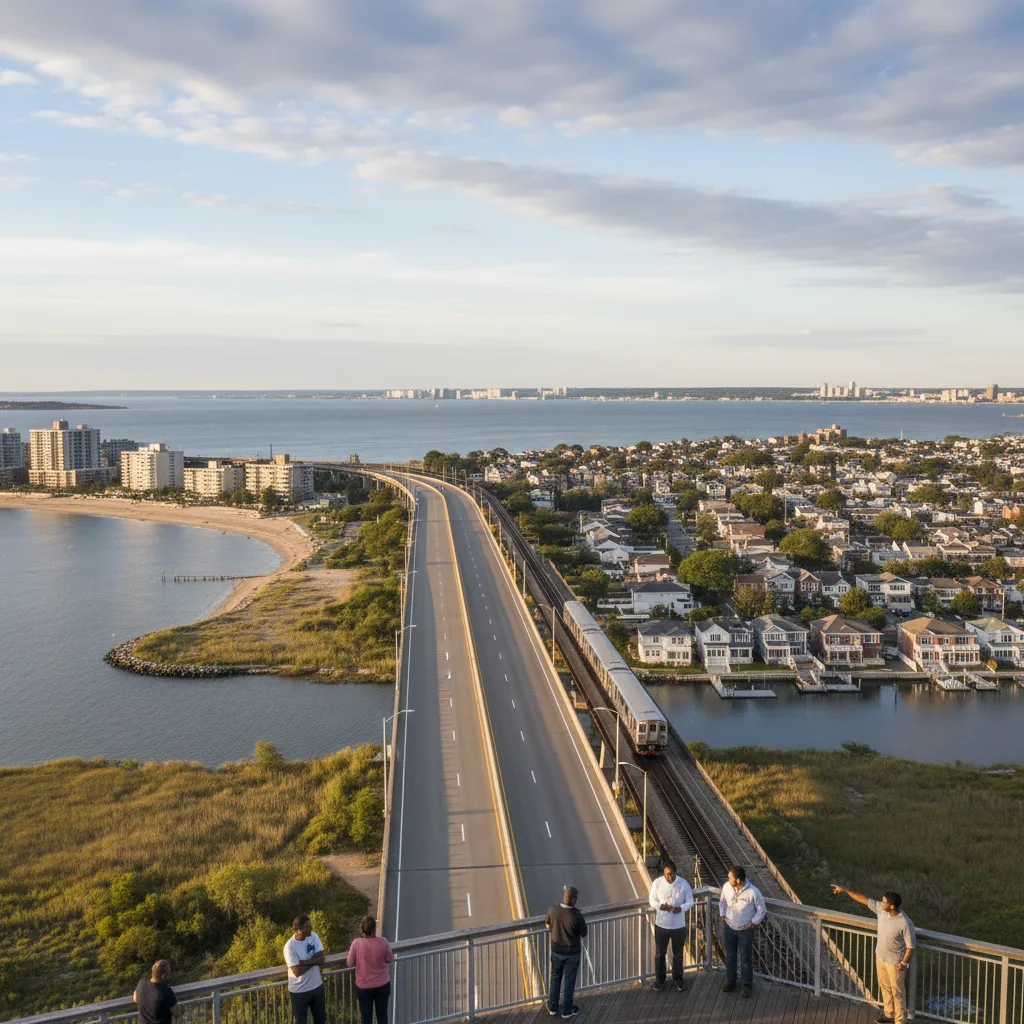
Project managers from the DOT’s Queens Borough Office confirmed that disruptions to traffic flow during construction will be minimized, with most heavy work scheduled during off-peak hours. Lane closures will be clearly marked, and local residents will receive regular updates through community board channels and the DOT website. Commissioner Rodriguez emphasized the importance of public awareness regarding the construction. He urged drivers to exercise extra caution in construction zones and reminded pedestrians to use marked crosswalks. The DOT also released a comprehensive project overview online, detailing the specific improvements for each section of the boulevard, including planned enhancements for the Cross Bay Bridge.
The Broader Context of Urban Safety
The challenges faced on Cross Bay Boulevard reflect a broader global conversation about urban planning and pedestrian safety in rapidly developing areas. Many cities worldwide are grappling with how to retrofit existing infrastructure to be more human-centric, moving away from car-dominated designs of the past. Discussions often revolve around the economic impacts of traffic congestion and road safety on international trade routes, which occasionally echo in local planning decisions, as outlined by broader analyses found on platforms like ABC News International. The need for sustainable and safe urban environments is paramount.
New York City’s Vision Zero program, launched in 2014, aims to eliminate all traffic fatalities and serious injuries. While progress has been made citywide, certain high-crash corridors, including Cross Bay Boulevard, continue to present significant hurdles. The program relies heavily on data-driven interventions, enforcement, and public education campaigns. The Queens Boulevard redesign, often dubbed the "Boulevard of Death" before its extensive safety upgrades, serves as a model for what can be achieved with sustained effort and investment. The hope is that Cross Bay Boulevard can achieve similar transformative results, becoming a safer, more welcoming thoroughfare for all who use it.
Frequently Asked Questions
What specific safety measures are being implemented on Cross Bay Boulevard? The project includes new pedestrian refuge islands, high-visibility crosswalks, upgraded LED street lighting, and improved traffic signal timing, especially near the Belt Parkway ramps and 157th Avenue. Future phases will introduce pedestrian countdown timers and adaptive traffic signal technology.
How will this project affect local traffic and residents during construction? To minimize disruption, most heavy construction work will occur during off-peak hours. Lane closures will be clearly marked, and the DOT plans to provide regular updates to the community through local channels. Drivers should anticipate minor delays and exercise extra caution.
When is the Cross Bay Boulevard safety project expected to be completed? The initial phase, focusing on refuge islands and crosswalks, is expected to finish by late Fall 2026. The entire project, including signal upgrades, is slated for full completion by the end of 2027. The city aims to monitor the impact closely through 2027.
Written by
Newstrix
Cross Bay Current
Related Articles
More in Development & Infrastructure →
Mamdani Fast-Tracks 12 Districts for Affordable Housing, 5 in Queens
Council Member Mamdani places 12 districts, including five in Queens, on an Affordable Housing Fast Track, expediting crucial development.
CM Ariola Calls for Infrastructure Overhaul After South Queens Flooding
CM Joann Ariola called for a major infrastructure overhaul in south Queens after weekend storms caused severe flooding, impacting Howard Beach. This is critical for future storm protection.
City Hall Accelerates Howard Beach Housing Development 2026
City Hall fast-tracks housing development in Howard Beach and South Ozone Park, aiming to ease Queens' affordable housing shortage now.
City Hall Accelerates Queens Housing Development for Low-Affordable Areas
City Hall moves to fast-track housing development in Queens, including South Ozone Park and Howard Beach, to address affordable housing shortages. This impacts Cross Bay Boulevard communities.
Your Essential Guide to the Rockaway Ocean Club in 2026
Discover what to expect at the Rockaway Ocean Club in 2026, a vibrant beachfront hub in Queens with dining, events, and community activities.
Is Howard Beach in Queens or Brooklyn? A Comprehensive Guide to This Unique NYC Neighborhood
Is Howard Beach in Queens or Brooklyn? Discover the definitive answer: Howard Beach is a vibrant Queens neighborhood with unique coastal charm.