


Cross Bay Businesses Brace for Inflation Amid Hormuz Blockade Concerns

NEW YORK — Business owners and residents along Cross Bay Boulevard in Queens are expressing growing concern over potential economic repercussions following the U.S. Navy's blockade of Iranian ports in the Strait of Hormuz. The Trump administration’s recent escalation of geopolitical tensions has triggered widespread apprehension regarding rising shipping costs and accelerating inflation.
Local merchants, already navigating a challenging economic climate, fear that the blockade could further impact their supply chains and profit margins. Conversations in delis and community centers across the Rockaways often turn to how global events now directly affect daily life in Queens.
Rising Shipping Costs Worry Local Merchants
The Strait of Hormuz, a crucial choke point for global oil shipments, plays a significant role in determining international fuel prices. A blockade in this region is expected to drive up oil costs, which in turn will translate to higher freight and transportation expenses for businesses.
“We’ve already seen our shipping invoices from suppliers tick up over the last six months, and this news from the Strait of Hormuz is only going to make it worse,” stated Michael Santoro, owner of 'Santoro's Fresh Seafood' near the Howard Beach end of Cross Bay Boulevard. “Everything from the fish we import to the packaging materials costs more to get here now. That’s a burden we have to absorb or pass on to our customers.”
The International Monetary Fund (IMF) has already warned that the conflict is pushing global economic growth lower [1][2]. This global economic slowdown often exacerbates inflationary pressures, directly affecting purchasing power for families in Queens.
Community Discusses Impact on Working Families
The prospect of increased prices on everyday goods and services is a significant concern for working families throughout the Cross Bay Boulevard corridor. Many residents rely on local businesses for essentials, and any upward price adjustments could strain household budgets.
At a recent informal gathering at the Bayswater Park playground, community advocate Maria Rodriguez voiced her anxieties. "Our families are already stretched thin with housing costs and groceries," Rodriguez told a small group. "If fuel prices go up, that means higher prices for food, for deliveries, for everything. It's going to hit working families' wallets harder than ever."
Concerns about the cost of living are a constant topic of discussion in local forums and neighborhood watch meetings. This new geopolitical development adds another layer of financial uncertainty to the community.
Global Tensions and Local Supply Chains
The U.S. Navy's order to block Iranian ports comes amidst escalating tensions over control of one of the world's most vital shipping routes. The move has drawn sharp warnings from China, which described the blockade as "dangerous and irresponsible," according to reports from Democracy Now on April 14, 2026.
Such international developments, while seemingly distant, have immediate consequences for the intricate global supply chains that feed urban centers like New York City. Products arriving at the Port of New York and New Jersey, many transported by sea, will inevitably reflect increased shipping costs.
Businesses along Cross Bay Boulevard, from hardware stores to clothing boutiques, depend on a steady and affordable flow of goods. Any disruption, particularly one impacting fuel prices, creates a ripple effect that touches every part of their operation. More details on global events impacting local economies can be found in the Cross Bay News Archive.
Government Response and Economic Outlook
While the immediate focus of the Trump administration is on geopolitical strategy, local economic development agencies are monitoring the situation closely. A spokesperson for the New York City Department of Small Business Services (SBS) stated that they are prepared to offer resources and guidance to businesses impacted by economic shifts.
However, concrete relief measures for rising costs tied to international events often take time to materialize. For now, businesses like 'Santoro's' and 'Mama Maria's Pizzeria' are preparing to make difficult decisions about pricing and operational adjustments. Residents seeking assistance can explore local events guide for community support programs.
Economists predict that if the blockade persists, the inflationary pressures will intensify across various sectors, including food, energy, and manufactured goods. This scenario poses a significant challenge for maintaining economic stability in diverse communities like those found in Queens.
Frequently Asked Questions About the Hormuz Blockade and Local Economy
How does the Strait of Hormuz blockade affect residents in Queens? The blockade in the Strait of Hormuz is expected to raise global oil prices, which directly increases the cost of transportation and shipping for businesses. This can lead to higher prices for consumer goods, including groceries and fuel, impacting the household budgets of Queens residents.
What are local businesses on Cross Bay Boulevard doing to prepare for potential inflation? Local businesses are monitoring their supply chain costs and considering various strategies, such as adjusting pricing or seeking alternative suppliers. Some merchants, like Michael Santoro, have already noted increases in their shipping invoices.
Which international bodies have commented on the economic impact of the blockade? The International Monetary Fund (IMF) has warned that the conflict and blockade are contributing to a downturn in global economic growth. China has also issued a strong warning, calling the U.S. Navy's move "dangerous and irresponsible."
Where can residents find more information on economic impacts? Residents can stay informed by following local news outlets and economic reports. For broader context on the naval blockade, one can consult the original source information on global geopolitical tensions.
Written by
Newstrix
Cross Bay Current
Related Articles
More in Local Economy & Business →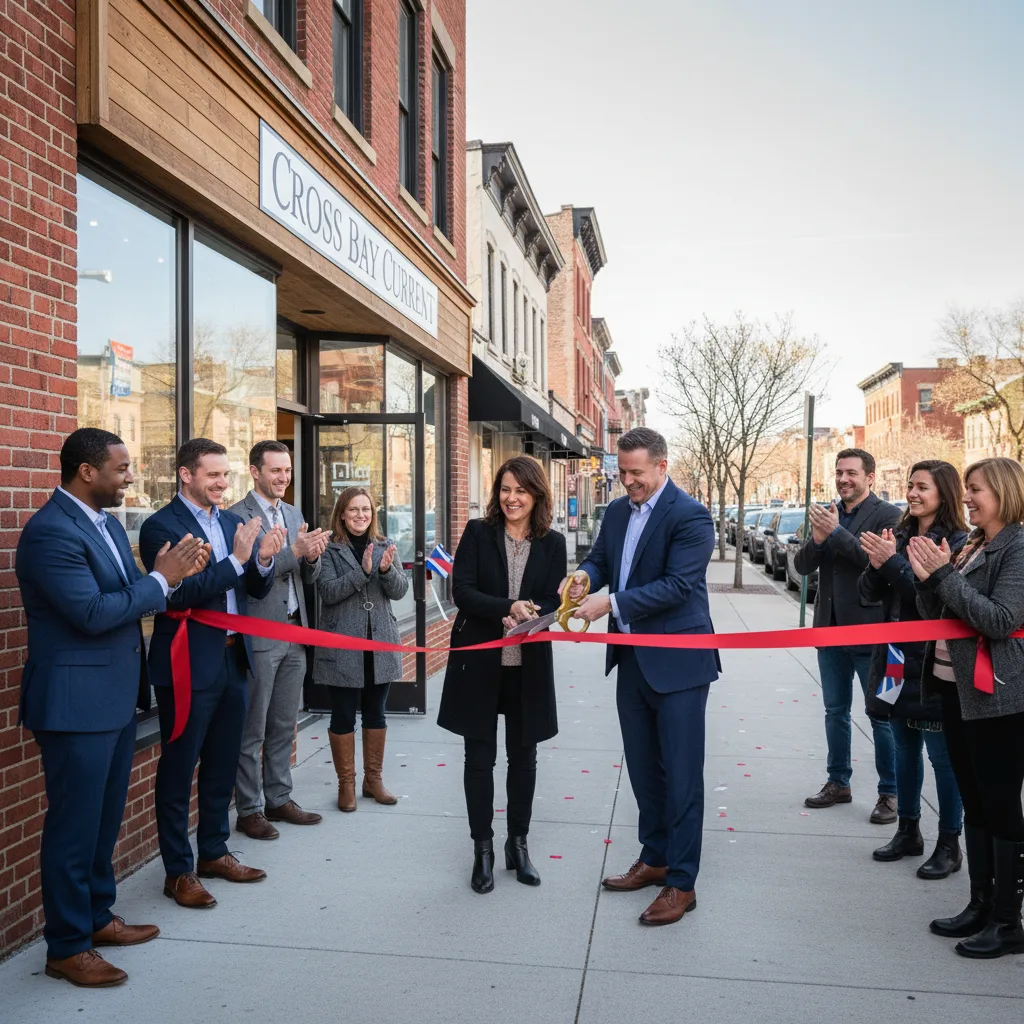
Cross Bay Boulevard Welcomes New Business with Grand Opening
A new business officially opened at 156-36 Cross Bay Boulevard with a ribbon-cutting ceremony on Friday, September 18, 2026, signaling local growth.
Iran's Foreign Minister Travels to China Amid West Asia Tensions
Iran's foreign minister travels to China amid West Asia tensions. Cross Bay Boulevard residents worry about oil prices, shipping, and local family budgets.
Queens Residents Brace for Trade Shocks as WTO Warns of Risks
The WTO warns of major global trade risks. Queens residents on Cross Bay Boulevard worry about rising prices for groceries and imports, preparing for supply delays.

Saudi Arabia Forms Maritime Coalition, Cross Bay Boulevard Reacts
Saudi Arabia launched a maritime coalition to protect shipping lanes. Cross Bay Boulevard residents fear higher prices and trade disruption if global tensions escalate.
Irish Whiskey Tariff Removal: Queens Businesses Eye Trade Impact 2026
Donald Trump announced plans to scrap the 10% tariff on Irish whiskey, a move that could impact Queens businesses along Cross Bay Boulevard and influence consumer prices.

Queens Residents Discuss Trump's Stance on Chinese Car Manufacturing
Cross Bay Boulevard residents discuss Trump’s stance on Chinese car manufacturing in the US, debating impacts on local jobs and vehicle prices.