


Howard Beach Queens Flooding Inundates Streets Along Cross Bay Boulevard
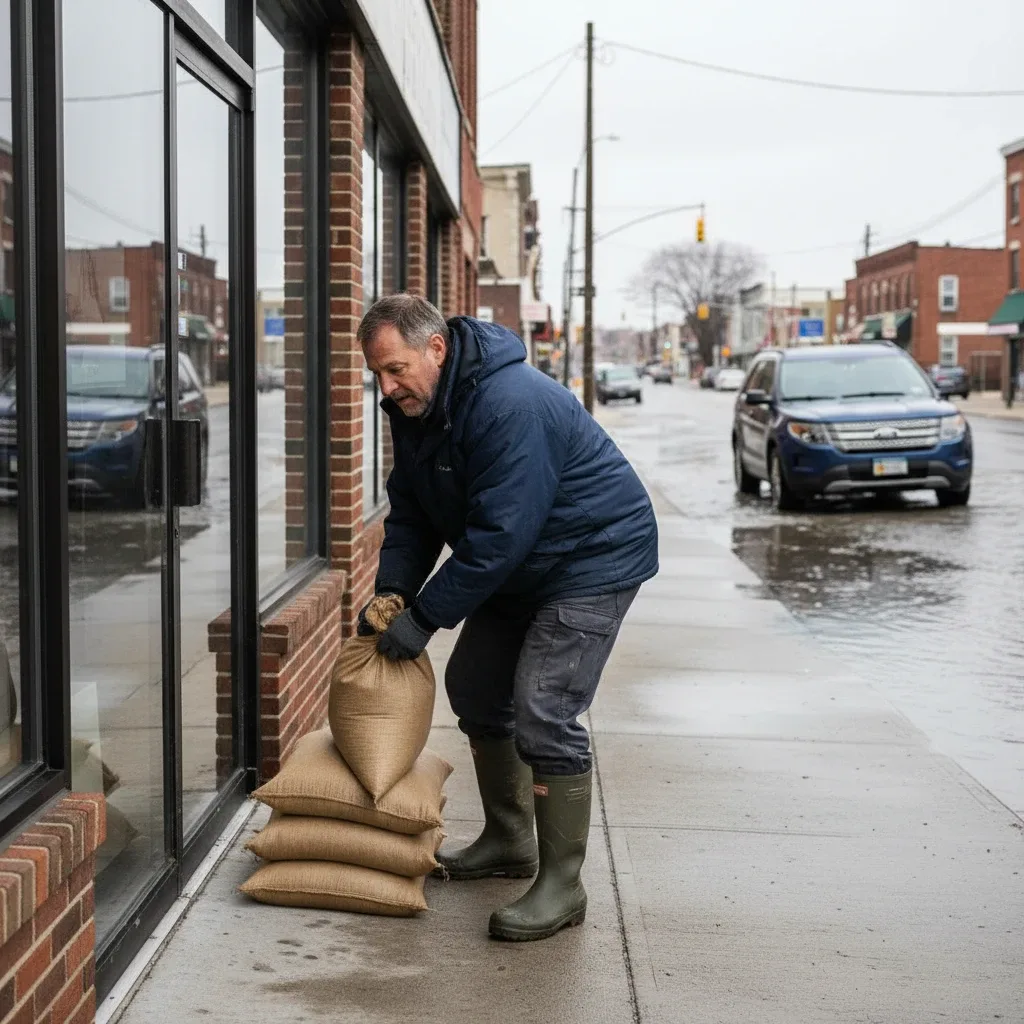
NEW YORK — Howard Beach homeowners along Shellbank Basin watched floodwaters reclaim low-lying streets on Tuesday as a lunar high tide coupled with a storm system pushed several inches of saltwater onto Cross Bay Boulevard. The coastal inundation, which left sections of the heavily trafficked commercial corridor temporarily impassable, was tracked by residents monitoring regional meteorological advisories.
By late morning, seawater had seeped past the curbs near 160th Avenue, surrounding parked SUVs and forcing pedestrians to navigate around deep pools of brackish water reflecting the neon signs of local diners. City environmental protection crews arrived shortly after noon to clear storm drains, though the high tide level prevented immediate drainage.
High Tide Events Recede Leaving Salt Water on Commercial Arteries
The morning high tide peaked at 8.4 feet, representing one of the highest non-storm tidal events recorded in South Queens this season. According to global coastal climate monitoring data, rising sea levels are systematically increasing the frequency of sunny-day tidal flooding in low-lying coastal neighborhoods.
While the water began to recede by mid-afternoon, it left behind a layer of corrosive salt residue on roads and vehicles. Local mechanics reported an uptick in undercarriage rust inspections from concerned car owners.
Resiliency Task Force Proposes Howard Beach Drainage Upgrades
"The chronic high-tide flooding has transformed from an occasional nuisance into an existential threat for our local businesses," said Community Board 10 member Frank Lombardi. Lombardi emphasized that the community board has requested immediate funding for backflow prevention valves.
The proposed upgrades would install specialized tidal gates inside the existing storm sewer network. These gates are designed to let rainwater escape into Jamaica Bay while blocking seawater from surging back up through the street grates.
This flooding threat aligns with the ongoing challenges highlighted by the MTA Queens coastal fortification project, which aims to secure public transportation assets against severe environmental impacts. Coastal protection advocates argue that neighborhood drainage and transit resilience must be addressed simultaneously.
Regional Climatology Reports Outline Queens Flood Risks
Data from the National Oceanic and Atmospheric Administration indicates that Howard Beach experiences high-tide flooding roughly eighteen days per year. Projections suggest this number could double within the next decade if regional infrastructure is not significantly upgraded.
The local geography exacerbates the water retention. Built on filled wetlands in the mid-twentieth century, the neighborhood sits just a few feet above sea level, making gravity-fed drainage highly inefficient.
A report published by the City University of New York suggests that retrofitting the entire coastal zone would require billions in capital investment. For now, municipal agencies are relying on temporary pumps and public warning systems.
Business Operators Install Barriers Along Commercial Strips
Frustrated by recurring cleanups, several merchants along Cross Bay Boulevard have taken flood protection into their own hands. Store owners have spent thousands of dollars installing removable aluminum flood barriers and heavy-duty industrial sump pumps.
These localized flooding issues have directly compounded the economic challenges facing local storefronts, contributing to a documented Cross Bay Boulevard merchants traffic decline that has alarmed commercial associations. Business owners argue that customers avoid shopping along the boulevard when streets are waterlogged.
"Every major high tide means we lose foot traffic for three or four hours," said bakery owner Maria Rossi. Rossi noted that many elderly customers are afraid of slipping on wet pavements or getting their vehicles stuck.
Coastal Protection Funding Allotted for South Queens Infrastructure
State legislators recently announced a $12 million grant intended for local shoreline stabilization projects in Howard Beach. The funds are earmarked for bulkheading improvements along the Shellbank and Hawtree Basins.
Engineering contracts are scheduled to be bid out by late spring, with construction projected to begin in winter. However, civic leaders remain skeptical about whether this funding will cover the true scope of the repairs.
Environmental groups are advocating for natural solutions, such as restoring salt marshes along the edge of Jamaica Bay. They believe wetlands can absorb wave energy and reduce the volume of water reaching residential streets.
Frequently Asked Questions
What steps should residents take when coastal flooding is predicted? Homeowners in high-risk zones should move their vehicles to higher ground, such as the elevated parking structures near local transit hubs. It is also critical to elevate electrical appliances in basements and ensure that personal sump pumps are fully operational before the high tide cycle begins.
How can business owners apply for city assistance to install flood barriers? The NYC Department of Small Business Services offers resilience grants and technical assistance programs for merchants located within active flood zones. Interested business owners can contact their local Queens Chamber of Commerce representative or submit an inquiry through the city's business assistance portal to learn about available funding.
Is the city planning to raise the streets in Howard Beach to prevent future flooding? While some street-raising projects have been completed in Broad Channel, municipal planners have stated that raising streets in Howard Beach is significantly more complex due to the density of existing sewer connections. The current focus remains on improving backflow prevention and reinforcing shoreline bulkheads rather than elevating roadways.
Written by
Newstrix
Cross Bay Current
Related Articles
More in Environment →
Cross Bay Boulevard Residents Connect Bangkok Flooding to Local Concerns
Queens residents on Cross Bay Boulevard link Bangkok's flood disaster to their own local concerns about storm drains and neighborhood flood preparedness.
Your Essential Guide to the Rockaway Ocean Club in 2026
Discover what to expect at the Rockaway Ocean Club in 2026, a vibrant beachfront hub in Queens with dining, events, and community activities.
Is Howard Beach in Queens or Brooklyn? A Comprehensive Guide to This Unique NYC Neighborhood
Is Howard Beach in Queens or Brooklyn? Discover the definitive answer: Howard Beach is a vibrant Queens neighborhood with unique coastal charm.
Your Essential Guide to Roy Wilkins Park Events in 2026
Discover the essential guide to Roy Wilkins Park events in 2026, featuring concerts, festivals, sports, and nature programs for South Queens residents.
Is Howard Beach in Queens? An Essential Guide to This Vibrant NYC Neighborhood
Discover if Howard Beach is in Queens, NYC, and explore this vibrant neighborhood's unique geography, community, lifestyle, and local attractions.
Your Guide to Enjoying All Things Go Festival in 2026
Plan your 2026 All Things Go Festival experience from Queens with our comprehensive guide, covering tickets, travel, and what to expect.